Bingo's Early Origins and Their Unexpected Echoes in Today's Pattern Recognition Tactics
Sofia Franke · Nov 16, 2026
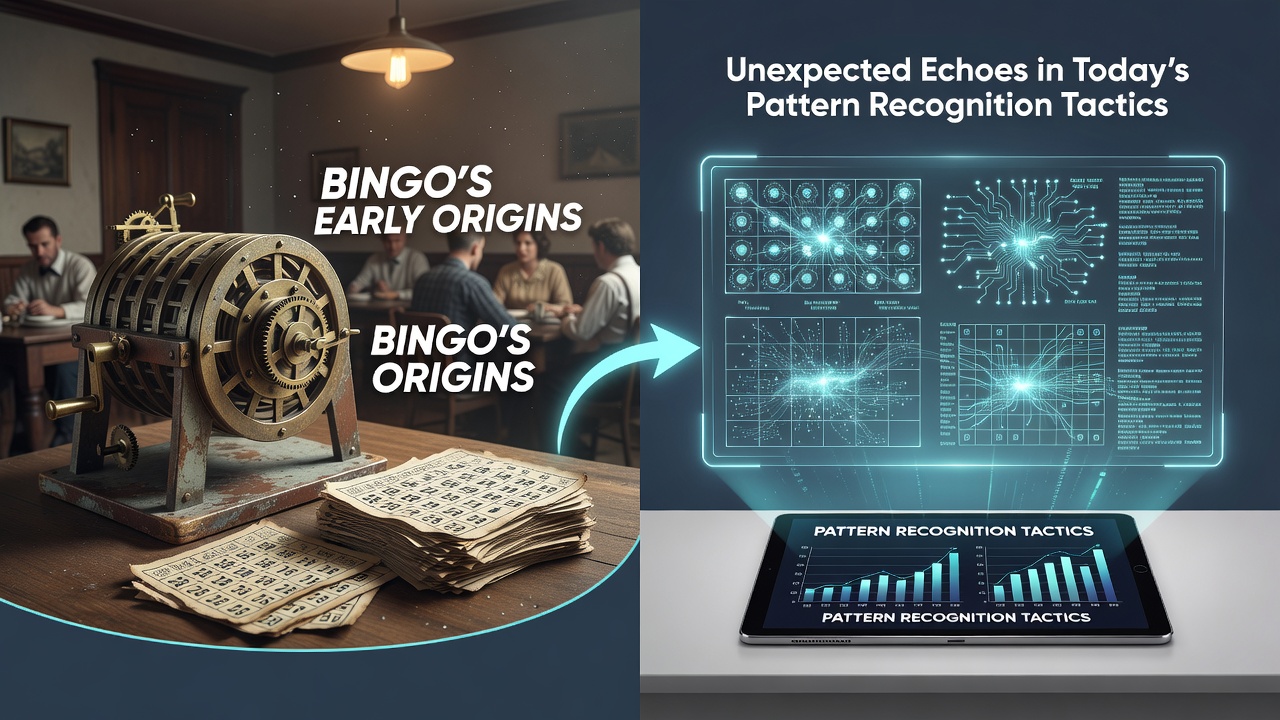
Bingo's Early Origins and Their Unexpected Echoes in Today's Pattern Recognition Tactics
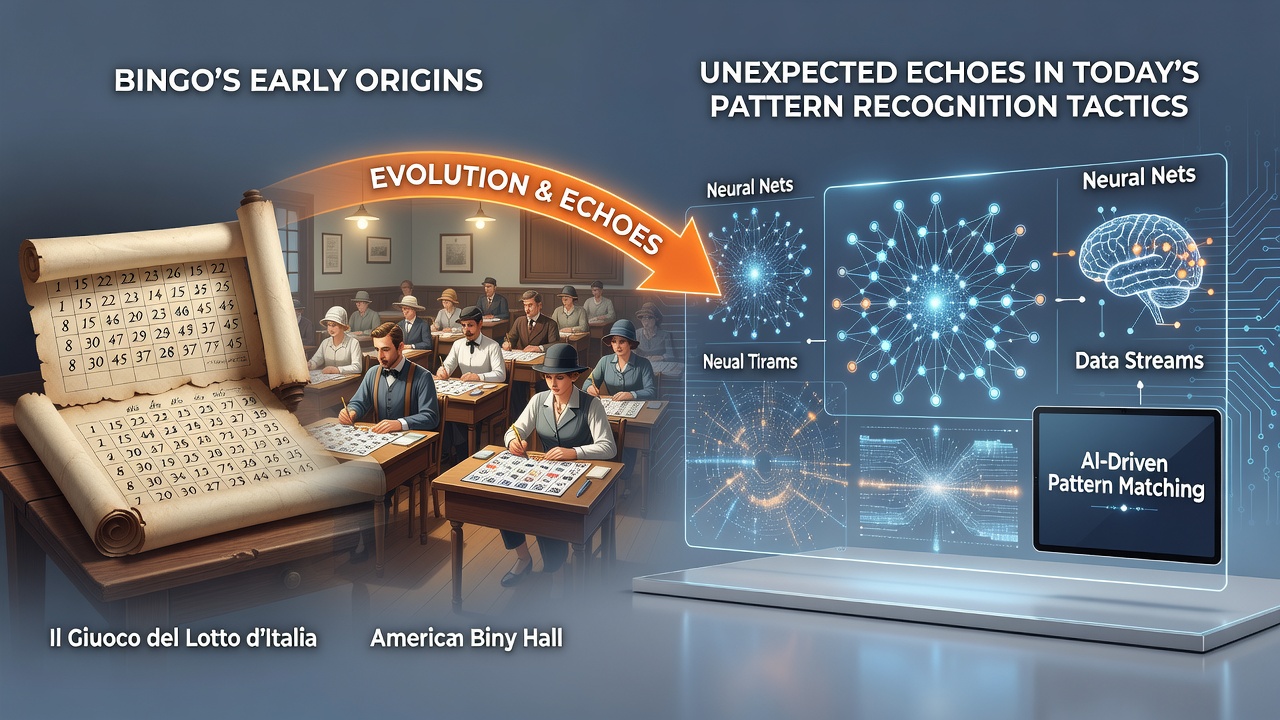
Historians trace bingo back to 16th-century Italy where the game known as Il Gioco del Lotto d'Italia used numbered tickets drawn from a bag, and players marked matching numbers on cards in a format that required quick identification of patterns across rows and columns. This structure spread through Europe as Le Lotto in France during the 18th century with participants filling grids according to drawn numbers while state-run lotteries adopted similar card systems for revenue collection. By the early 19th century the game reached England under names such as housey-housey or tombola where military personnel and later civilians played with numbered cards and beans for markers creating the foundation for rapid visual scanning techniques that later influenced data handling methods.
Edwin Lowe brought a version to the United States in the 1920s after observing a similar game at a carnival in Georgia and he standardized the term bingo while selling pre-printed cards that featured five-by-five grids with a free space in the center. Manufacturers soon produced thousands of unique card combinations each week to prevent duplication and this demand drove early developments in combinatorial mathematics that echo in contemporary algorithms designed to generate unique data sets for machine learning training. Observers note that the core mechanic of matching called numbers against fixed positions on a card trained players to recognize sequences and clusters which parallels the pattern detection routines used in modern software for sorting large data arrays.
From Card Grids to Algorithmic Matching
Researchers at several European institutions have documented how bingo card layouts influenced early punched-card systems in the mid-20th century when tabulating machines processed information through hole patterns that mirrored the number placements on bingo tickets. These mechanical methods evolved into digital equivalents where software now scans for winning combinations using matrix comparison functions that operate on the same row-column logic. In November 2026 several international conferences on computational pattern analysis are scheduled to highlight historical gaming mechanics as case studies in efficient search protocols because bingo-style grids allow for rapid parallel checks that reduce processing time in high-volume environments.
One study from a Canadian research center examined how bingo terminology such as lines columns and full houses appears in documentation for database query optimization tools where similar terms describe result filtering operations. Data from industry reports show that developers in Australia and the European Union have incorporated grid-based verification steps into quality control software for manufacturing lines because the visual layout supports quick anomaly detection across multiple variables at once. Those who have examined the code repositories find repeated references to bingo-derived terms in comments that describe pattern matching functions for image analysis programs used in medical diagnostics.
Contemporary Applications in Technology and Security
Security firms in Asia and North America apply bingo-like pattern recognition to intrusion detection systems that flag unusual sequences in network traffic logs by comparing incoming data packets against predefined templates. According to figures released by the Asia-Pacific Gaming Association these methods achieve higher accuracy rates when grids are randomized in ways that echo the unique card distributions created for bingo halls during the 1930s. Academic papers from universities in Sweden detail experiments where participants trained on bingo variants demonstrated improved performance in visual search tasks that transfer directly to roles involving satellite imagery analysis and traffic monitoring.
Software engineers at several research institutions have published findings showing that bingo card generation algorithms serve as efficient models for creating test data sets in artificial intelligence projects because they ensure balanced distribution across possible outcomes. This approach reduces bias in training sets for facial recognition systems and fraud detection platforms where balanced sampling mirrors the requirement that each bingo card contain distinct number arrangements. Government agencies in New Zealand have referenced similar techniques in public documents describing tools for processing census data where grid-based verification speeds up cross-referencing of household records.
Conclusion
The progression from 16th-century Italian lotteries through 20th-century American commercialization produced a game structure whose emphasis on rapid pattern identification continues to appear in unrelated fields today. Evidence from historical records and current technical documentation indicates that the same principles of grid comparison and sequence detection underpin both traditional bingo play and advanced computational methods. Observers continue to identify these connections across regions as new applications emerge in data science and automated analysis systems.